
2024 id checking guide
Digital identity verification is crucial in today’s world, offering a secure and faster alternative to traditional methods, with forecasts predicting 86 billion checks by 2025.
The Rising Importance of Digital Identity Verification
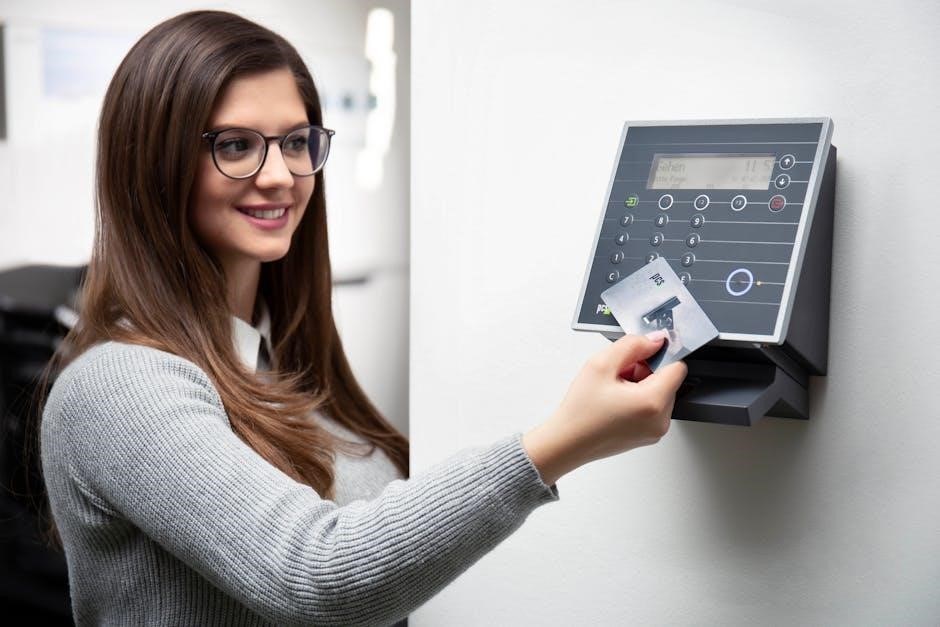
In an increasingly digital landscape, the importance of robust identity verification cannot be overstated. Traditional, manual identity checks are proving inadequate against the escalating threats of identity theft and fraud, necessitating a shift towards sophisticated digital solutions. The financial sector, in particular, relies heavily on accurate identity verification to safeguard assets and maintain trust.
Digital identity verification offers a streamlined and secure alternative, leveraging advanced technologies to confirm an individual’s claimed identity online. This process is no longer merely a compliance requirement but a fundamental pillar of security for businesses and government agencies alike. The average identity fraud rate across verifications reached 2.5% in 2024, highlighting the urgent need for enhanced verification methods.
As digital interactions become more prevalent, the demand for reliable identity verification will only continue to grow, making it a critical component of a secure digital ecosystem.
Statistics and Forecasts for 2024-2025
The digital ID verification market is experiencing substantial growth, driven by increasing fraud rates and the expanding need for secure online transactions. Current statistics reveal a significant surge in demand for these services, with projections indicating continued expansion in the coming years. Notably, the average identity fraud rate across verifications stood at 2.5% throughout 2024, underscoring the vulnerabilities within existing systems.
Forecasts predict a staggering 86 billion digital ID verification checks will be conducted in 2025, a clear indication of the escalating reliance on these technologies. This exponential growth is fueled by the proliferation of online services, the rise of fintech, and the increasing sophistication of fraudulent activities. Businesses are proactively investing in advanced verification solutions to mitigate risks and ensure compliance.

These figures demonstrate a clear trend: digital identity verification is no longer optional, but a necessity for navigating the modern digital landscape.

Core Methods of ID Verification
Essential techniques include document verification, biometric authentication utilizing facial recognition and liveness detection, and knowledge-based authentication for robust identity confirmation.
Document Verification
Document verification remains a cornerstone of ID checking, involving the authentication of physical credentials presented by individuals. This method traditionally relied on in-person checks, but has rapidly evolved with digital solutions. A primary focus is on verifying the authenticity of government-issued documents like driver’s licenses and passports, ensuring they haven’t been tampered with or forged.
Advanced systems now employ image analysis and data extraction technologies to automatically assess document validity. These systems compare the information on the document against trusted databases and security features. National ID card verification is also increasingly prevalent, particularly in regions where these cards are the standard form of identification. The process involves confirming the card’s legitimacy and the associated individual’s details.
However, document verification isn’t foolproof; sophisticated fraudsters can create convincing fakes. Therefore, it’s often used in conjunction with other methods, like biometric checks, to create a layered security approach.
Driver’s License and Passport Checks
Driver’s licenses and passports are frequently used for identity verification due to their widespread acceptance and standardized formats. In 2024, the process extends beyond visual inspection, incorporating sophisticated technologies to detect fraud. Systems analyze document images for alterations, inconsistencies, and security feature validity – holograms, microprinting, and unique identifiers are all scrutinized.
Data extracted from these documents is cross-referenced with databases maintained by issuing authorities to confirm authenticity and prevent the use of revoked or expired credentials. Automated systems can flag suspicious documents for manual review, enhancing accuracy. The rise of mobile driver’s licenses (mDLs) presents both opportunities and challenges, requiring secure digital verification methods.

Effective checks require staying updated with evolving document security features and fraud techniques, as counterfeiters continually refine their methods. Combining document verification with biometric authentication provides a robust layer of security.
National ID Card Verification
National ID card verification is a cornerstone of identity confirmation in many countries, offering a standardized and government-issued form of identification. In 2024, verifying these cards involves more than just visual checks; advanced systems analyze card features for authenticity, including security holograms, embedded chips, and unique identifiers.
Automated systems extract data from the card and cross-reference it with national databases to confirm validity and detect potential fraud. This process helps prevent the use of lost, stolen, or forged IDs. The increasing sophistication of counterfeit cards necessitates continuous updates to verification technologies and fraud detection methods.
Challenges arise from the varying formats and security features across different national ID cards globally. Robust verification solutions must accommodate these differences while maintaining a high level of accuracy and security. Combining national ID verification with biometric checks further strengthens the process.
Biometric Verification
Biometric verification represents a significant leap forward in identity assurance, moving beyond “something you have” (like an ID) to “something you are.” In 2024, this encompasses a range of technologies, primarily facial recognition and increasingly, liveness detection, to combat sophisticated fraud attempts.

Facial recognition systems analyze unique facial features to confirm a user’s identity, comparing a live scan against a database of known faces. However, the vulnerability to spoofing – using photos or videos – has driven the adoption of liveness detection.
Liveness detection ensures the scanned face belongs to a real, live person, employing techniques like micro-movements analysis and challenge-response tests. This layered approach significantly enhances security. Biometric data’s sensitivity necessitates strict adherence to privacy regulations and secure data storage practices.
Facial Recognition Technology
Facial recognition technology is a cornerstone of modern biometric verification, rapidly evolving in its accuracy and sophistication throughout 2024. The process involves capturing a digital image or video of a person’s face and then analyzing its unique characteristics – the distances between eyes, the shape of the nose, and contours of the jawline – to create a biometric template.

This template is then compared against a database of known faces to confirm identity. Advanced algorithms now account for variations in lighting, pose, and facial expressions, improving matching rates. However, it’s crucial to acknowledge the technology’s limitations.
Susceptibility to spoofing attacks, where fraudsters present a photograph or video, remains a concern, driving the need for integration with liveness detection measures. Ethical considerations surrounding privacy and potential bias are also paramount, demanding responsible implementation and data handling.
Liveness Detection
Liveness detection is a critical security layer integrated with facial recognition and other biometric methods to prevent spoofing attacks – the presentation of fake identities like photographs or videos. In 2024, sophisticated liveness checks are moving beyond simple “blink detection” to more robust techniques.
These include passive liveness, analyzing skin texture and subtle physiological signals, and active liveness, prompting users to perform specific actions like tilting their head or smiling. The goal is to verify that the presented face belongs to a live, present person.
Advanced systems utilize 3D facial mapping and infrared analysis to detect depth and distinguish between a real face and a flat image. The increasing prevalence of deepfakes necessitates continuous innovation in liveness detection, making it an essential component of secure digital identity verification processes, safeguarding against fraudulent activities.
Knowledge-Based Authentication (KBA)
Knowledge-Based Authentication (KBA) relies on verifying an individual’s identity through questions only they should know, based on publicly available records or personal information. While historically common, KBA is facing increasing scrutiny in 2024 due to data breaches and the availability of personal data online.
Traditional KBA often involves questions like “What was your mother’s maiden name?” or “What city were you born in?” However, these answers are increasingly accessible through social media and data brokers, diminishing its effectiveness against sophisticated fraudsters.
Modern KBA implementations are evolving to incorporate more dynamic and challenging questions, drawing from a wider range of data sources and employing behavioral biometrics. Despite these improvements, KBA is often used as a secondary verification layer, complementing stronger methods like biometric authentication and document verification for enhanced security.

Emerging Trends in ID Verification — 2024
Key trends shaping ID verification in 2024 include verifiable credentials networks, generative AI applications, and a heightened focus on liveness-centric biometric authentication methods.
Verifiable Credentials Networks
Verifiable credentials networks represent a paradigm shift in digital identity verification, moving away from centralized databases and towards a decentralized, user-centric approach. These networks leverage blockchain technology or similar distributed ledger systems to enable individuals to control their own identity data and selectively share it with relying parties.
Instead of repeatedly submitting the same identity information to multiple organizations, users can present digitally signed credentials issued by trusted authorities – such as government agencies or educational institutions. This not only streamlines the verification process but also enhances privacy and security by minimizing data sharing.
The benefits are substantial: reduced fraud, improved user experience, and greater interoperability between different identity systems. As adoption grows, verifiable credentials are poised to become a cornerstone of secure and privacy-preserving digital interactions, fundamentally changing how identity is managed and verified online.
Generative AI in ID Verification
Generative Artificial Intelligence (AI) is rapidly emerging as a transformative force within the identity verification landscape in 2024, offering innovative solutions to combat increasingly sophisticated fraud techniques. Unlike traditional rule-based systems, generative AI can analyze vast datasets of identity documents and biometric data to identify subtle anomalies and patterns indicative of forgery or manipulation.
This technology can synthesize realistic variations of identity documents, enabling more robust testing and training of verification systems. Furthermore, generative AI can assist in automating complex tasks such as document quality assessment and data extraction, significantly improving efficiency and accuracy.

However, responsible implementation is crucial, addressing concerns around bias and ensuring compliance with privacy regulations. As generative AI continues to evolve, it promises to play an increasingly vital role in strengthening identity verification processes and safeguarding against fraudulent activities;
Liveness-Centric Biometric Authentication
Liveness detection is becoming paramount in biometric authentication during 2024, moving beyond simple presence checks to confirm the authenticity of a live person. Traditional facial recognition can be spoofed with photos or videos, but liveness-centric approaches actively challenge the system to prove genuine presence.
These methods employ techniques like micro-movements analysis, texture analysis, and even subtle physiological measurements to differentiate between a real person and a presentation attack. Advanced liveness checks request specific actions – blinking, smiling, or head movements – to ensure the user is physically present and engaged.
This shift towards liveness-centric authentication significantly enhances security, reducing the risk of fraudulent access and bolstering trust in digital identity verification processes. It’s a key trend for businesses prioritizing robust and reliable identity confirmation.

Choosing the Right ID Verification Method
Selecting the optimal method requires careful consideration of cost, implementation complexity, and specific use case needs to balance security and user experience effectively.
Cost Considerations
Evaluating the financial implications of different ID verification methods is paramount. Basic document verification can appear inexpensive initially, but manual review processes can quickly escalate costs due to labor intensity and potential inaccuracies. Biometric solutions, while offering enhanced security, often involve higher upfront investments in technology and ongoing maintenance fees.
Knowledge-Based Authentication (KBA) presents a lower-cost option, but its vulnerability to social engineering and data breaches can lead to significant financial repercussions from fraud. Verifiable Credentials Networks may have associated transaction fees or subscription costs.
Furthermore, consider the cost of failed verifications – lost customers and potential revenue. A balance must be struck between affordability and the level of security required, aligning with your business’s risk tolerance and the value of the transactions being protected. Thorough cost-benefit analysis is essential for informed decision-making.
Implementation Requirements
Successfully integrating ID verification demands careful consideration of technical and operational prerequisites. Document verification often necessitates robust image processing capabilities and integration with document databases. Biometric solutions require specialized hardware – cameras, scanners – and significant data storage capacity, alongside adherence to privacy regulations.
KBA implementation is relatively straightforward but demands a reliable knowledge source and robust fraud detection mechanisms. Verifiable Credentials Networks require compatibility with relevant standards and potentially blockchain infrastructure.
Beyond technology, internal processes must be adapted. Staff training is crucial for handling verification results and addressing potential issues. Compliance with KYC/AML regulations is non-negotiable. Scalability is also key; the chosen solution should accommodate future growth without performance degradation. A phased rollout is often recommended to minimize disruption and optimize the implementation process.
Suitability for Different Use Cases
The optimal ID verification method hinges on the specific application. Fintech startups prioritizing rapid onboarding may favor streamlined biometric solutions or KBA, balancing speed with acceptable risk. Established financial institutions, dealing with higher transaction values, typically require multi-layered approaches – document verification coupled with biometric authentication – for enhanced security.
E-commerce platforms might employ document verification for high-value purchases and KBA for lower-risk transactions. Government services demanding stringent identity assurance necessitate robust document verification and potentially verifiable credentials.
Generative AI-powered solutions are emerging as valuable tools for fraud detection across all sectors. Ultimately, a risk-based approach is paramount, tailoring the verification level to the potential consequences of identity fraud. Considering user experience is also vital; overly cumbersome processes can lead to customer abandonment.