
harley-davidson factory security system manual
Harley-Davidson Factory Security System Manual: An Overview
This manual details the advanced security features protecting your Harley-Davidson, offering insights into system operation, troubleshooting, and maintenance for optimal peace of mind.
Harley-Davidson has long prioritized rider security, evolving its systems alongside technological advancements. Initially, basic key ignition systems offered limited protection, susceptible to traditional theft methods. However, recognizing the growing need for robust security, Harley-Davidson began integrating sophisticated electronic systems.
These early systems included basic alarms and immobilizers, deterring opportunistic thieves. Modern Harley-Davidson security systems now encompass a multi-layered approach, featuring key fobs, security modules, and often, integrated GPS tracking via Harley-Davidson Connect. These systems aim to prevent theft, provide location assistance in case of recovery, and offer remote control features for enhanced convenience. This manual provides a comprehensive guide to understanding and utilizing these advanced security features, ensuring your motorcycle remains protected.
History of Harley-Davidson Security Technology
Harley-Davidson’s security evolution began with simple mechanical locks, evolving to keyed ignitions in the mid-20th century. The 1990s saw the introduction of basic alarm systems, triggered by unauthorized ignition tampering. These early alarms provided a deterrent but lacked advanced features.
The early 2000s brought immobilizer technology, preventing engine start without the correct key or fob. Subsequent advancements included remote keyless entry and improved siren systems. More recently, Harley-Davidson integrated Smart Security Modules (SSM) and subscription-based services like Harley-Davidson Connect, offering GPS tracking and remote monitoring. Today’s systems represent a significant leap, providing comprehensive protection against theft and offering riders peace of mind through connected technology and proactive security measures.
System Components & Functionality
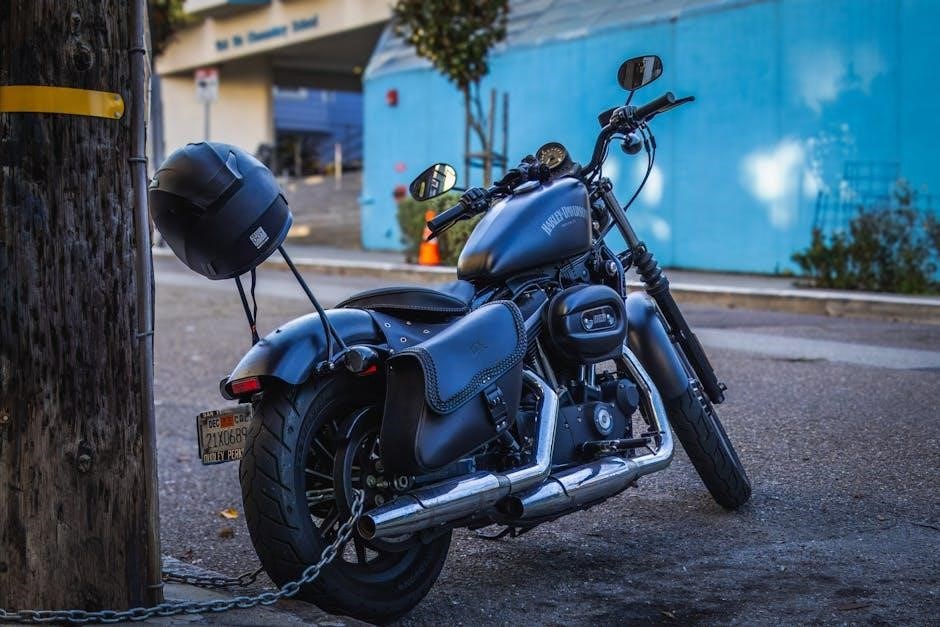
The Harley-Davidson security system comprises a key fob, security module, alarm siren, and immobilizer, working together to deter theft and protect your motorcycle.
Key Fob Operation & Programming
Your Harley-Davidson key fob is the primary interface for controlling the security system. Basic functions include arming and disarming the alarm, activating the remote start (if equipped), and locating the motorcycle via audible chirp. To arm the system, press the designated lock button; a confirmation chirp and flashing security indicator light will confirm activation.
Programming new key fobs or replacing lost ones requires a specific procedure. Typically, this involves entering a learning mode via the motorcycle’s instrumentation, followed by pressing buttons on the new fob to synchronize it with the security module. Refer to your specific model’s service manual for detailed, step-by-step instructions, as procedures can vary. Incorrect programming can render the fob inoperable, necessitating professional assistance.
Always ensure the key fob battery is in good condition for reliable operation. A weak battery can cause intermittent issues or complete failure to communicate with the system.
Security Module Location & Identification
The Harley-Davidson security module is the brain of the system, responsible for processing signals from the key fob, sensors, and the immobilizer. Its location varies depending on the motorcycle model and year, but it’s commonly found beneath the seat, within the fairing, or near the battery compartment. Always consult your specific model’s service manual for the precise location.
Identifying the module is crucial for servicing or replacing it. It’s typically a black plastic box with various wiring connectors. Look for a label indicating its part number and functionality – often labeled as “Security Module” or “SSM (Smart Security Module).” Do not attempt to disassemble the module as it contains sensitive electronic components.
Properly securing the module is vital to prevent tampering and ensure system integrity. Ensure all mounting hardware is present and tightened.
Alarm Siren & Backup Battery
The alarm siren is the audible deterrent of the Harley-Davidson security system, emitting a loud, piercing sound when triggered. Its location typically resides under the seat or within the motorcycle’s bodywork, strategically positioned for maximum audibility. Regularly inspect the siren for physical damage or obstructions that could hinder its operation.
A crucial component is the backup battery, which powers the security system even when the motorcycle’s main battery is disconnected. This prevents theft by ensuring the alarm remains active. The backup battery’s lifespan is limited and requires periodic replacement – typically every 2-3 years, or as indicated in your owner’s manual.
Testing the siren and backup battery functionality is a vital part of routine maintenance. A weak backup battery compromises the system’s effectiveness.
Troubleshooting Common Issues
This section provides solutions for frequent problems, including false alarms, key fob synchronization, and immobilizer malfunctions, ensuring your Harley-Davidson’s security functions correctly.
Alarm System False Triggers
False alarms can be frustrating, often stemming from environmental factors or minor vehicle disturbances. Common causes include wind, vibrations from nearby traffic, or even temperature fluctuations. To minimize these occurrences, ensure the motorcycle is parked on a level surface and avoid parking under trees with falling debris.

Sensitivity adjustments, if available in your system (refer to your specific model’s documentation), can help fine-tune the alarm’s responsiveness. Regularly inspect the shock sensors and proximity detectors for any damage or obstructions. A loose connection or faulty sensor can easily trigger a false alarm. If false alarms persist, consult a qualified Harley-Davidson service technician for a thorough system diagnosis and recalibration. Ignoring persistent false triggers can drain the battery and diminish reliance on the security system.
Key Fob Battery Replacement & Resync
Replacing the key fob battery is a straightforward process, typically requiring a small screwdriver and a new CR2032 battery. Consult your owner’s manual for the exact procedure, as access points vary by model. After replacement, the system may require resynchronization with the motorcycle’s security module.
Resyncing usually involves a specific sequence of key fob button presses and ignition cycling, detailed in your manual. Failure to resync will prevent the fob from operating the alarm or starting the motorcycle. If the resync process fails, ensure the battery is correctly installed and try again. Persistent issues may indicate a problem with the key fob itself or the security module, requiring professional diagnosis and potential reprogramming by a Harley-Davidson dealer.
Immobilizer System Malfunctions
The Harley-Davidson immobilizer system prevents the engine from starting without the authorized key fob present. Malfunctions can manifest as a no-start condition, even with a fully charged key fob battery. Common causes include a faulty key fob, a damaged or corroded antenna ring around the ignition switch, or a failing security module;
Troubleshooting involves verifying the key fob’s functionality (try both fobs if available), inspecting the antenna ring for damage, and checking for any diagnostic trouble codes (DTCs) using a compatible scan tool. If DTCs are present, consult the service manual for interpretation and repair procedures. Severe or recurring immobilizer issues typically necessitate professional diagnosis and repair at a Harley-Davidson dealership, as they often require specialized tools and software for reprogramming.

Advanced System Features
Explore cutting-edge functionalities like remote start, the Smart Security Module (SSM), and Harley-Davidson Connect services, enhancing security and rider convenience.
Remote Start System Integration
Harley-Davidson’s remote start functionality, when equipped, is seamlessly integrated with the factory security system. This integration ensures the motorcycle can only be remotely started when the security system is properly armed and authenticated via the key fob or the Harley-Davidson Connect app.
Activation requires a specific sequence, typically a prolonged press of the remote start button on the fob. The security system verifies the signal, disarms the immobilizer, and initiates the starting sequence. Attempting to remotely start with a compromised or un-paired fob will be prevented by the system.
Furthermore, the remote start feature includes a range limitation and automatic shut-off timer for enhanced safety. The Harley-Davidson Connect app provides additional control and monitoring capabilities, including remote start status and security alerts. Proper configuration and understanding of these features are crucial for optimal operation.
Smart Security Module (SSM) Details
The Smart Security Module (SSM) is the central processing unit for Harley-Davidson’s advanced security systems. This sophisticated module manages all security functions, including alarm activation, immobilizer control, and communication with the key fob and Harley-Davidson Connect services.

The SSM utilizes a complex network of sensors to detect unauthorized access or movement. It continuously monitors the motorcycle’s electrical system for tampering and responds accordingly. Diagnostic information and system status are stored within the SSM, accessible through authorized diagnostic tools.
Proper SSM functionality is vital for the entire security system’s effectiveness. Firmware updates, delivered through Harley-Davidson dealerships or the Connect service, ensure the SSM remains protected against evolving threats and maintains optimal performance. Regular system checks can verify SSM operation.

Harley-Davidson Connect Services
Harley-Davidson Connect enhances your motorcycle’s security through a subscription-based cellular connectivity service. This service provides remote access to your bike’s security features via a smartphone app, offering real-time notifications of alarm events and motorcycle location tracking.
Key features include remote locking/unlocking, tamper alerts, and the ability to initiate a remote start (if equipped). The Connect service also facilitates stolen vehicle recovery assistance, working with law enforcement to locate your motorcycle.
Subscription levels vary, offering different feature sets. Regular software updates, delivered over-the-air through the Connect service, ensure the security system remains current. Activation and management of the Connect service are performed through the Harley-Davidson app or a dealership.

Manual Override & Disabling
This section outlines procedures for emergency situations, temporary deactivation for service, and professional resets performed by authorized Harley-Davidson technicians.
Emergency Disablement Procedures
In critical situations where the security system prevents operation, a specific override sequence may be required. This procedure, detailed within, allows temporary disabling of the immobilizer, enabling starting and movement of the motorcycle. However, this should only be employed in genuine emergencies – such as a system malfunction leaving you stranded, or a theft recovery scenario.
The exact sequence varies by model year and system version; consult the specific section for your motorcycle. Typically, it involves a combination of key fob button presses and ignition switch manipulations. Caution: Repeated or improper use of the emergency disable can compromise system integrity. Following successful disablement, immediate professional diagnosis and repair are crucial to restore full security functionality. Document the event for warranty or insurance purposes.
Temporary System Deactivation
For maintenance or transport, a temporary deactivation mode is available, differing from the emergency override. This feature allows controlled disabling of specific security functions – like the alarm – while leaving the immobilizer active, preventing unauthorized starting. Accessing this mode usually involves a unique key fob sequence or a diagnostic tool connection.
This is ideal for servicing, where alarm activation during work could be disruptive. However, remember that deactivation reduces security; never leave a deactivated motorcycle unattended in a vulnerable location. Re-activation is typically automatic upon ignition, or via a specific command. Always verify full system functionality post-deactivation. Refer to your model’s specific instructions for the correct procedure and limitations.
Professional System Reset
A complete system reset should only be performed by a certified Harley-Davidson technician utilizing specialized diagnostic equipment. This procedure addresses deeply embedded software glitches or corruption that standard troubleshooting cannot resolve. It involves erasing the security module’s memory and reloading the factory default programming, effectively restoring the system to its original state.
This process requires a secure connection to the Harley-Davidson network for software verification and often necessitates key code re-learning. Attempting a reset without proper tools and knowledge can render the security system inoperable or compromise its effectiveness. Following a reset, all key fobs must be re-programmed to the module. Documentation of the reset and any associated codes is crucial for warranty purposes and future diagnostics.

System Updates & Maintenance
Regular software updates and proactive maintenance are vital for ensuring your Harley-Davidson security system operates flawlessly and remains protected against emerging threats.
Software Update Procedures
Maintaining the latest software is crucial for optimal security system performance. Harley-Davidson periodically releases updates to address vulnerabilities and enhance functionality. These updates can often be applied through the Harley-Davidson Connect app, if equipped, or directly via a compatible diagnostic tool connected to the motorcycle’s diagnostic port.
Before initiating an update, ensure the motorcycle has a fully charged battery and a stable connection (if using a wireless method). Follow the on-screen prompts carefully during the update process, and avoid interrupting the process as this could potentially damage the security module. Successful updates are typically confirmed with a visual or audible notification. Always verify the update completed correctly by checking the system version in the security settings menu.

Refer to the Harley-Davidson owner’s manual or website for specific instructions related to your motorcycle model and security system version.
Regular System Checks
Proactive system checks are vital for ensuring your Harley-Davidson’s security remains effective. Periodically test the alarm system by activating it with the key fob and verifying the siren sounds. Confirm the immobilizer function is working by attempting to start the motorcycle with an incorrect key.
Visually inspect the security module and wiring harness for any signs of damage or corrosion; Ensure the backup battery for the siren is in good condition, as this powers the alarm during a main battery disconnect. Check the key fob batteries regularly and resynchronize if necessary.
Document any anomalies or malfunctions and consult a qualified Harley-Davidson service technician for diagnosis and repair. Consistent monitoring contributes to long-term system reliability.
Battery Maintenance for Security Components
Maintaining optimal battery health is crucial for the reliable operation of your Harley-Davidson’s security system. The security module, siren, and key fobs all rely on sufficient power. Regularly check the motorcycle’s main battery voltage and ensure it’s fully charged, especially during periods of inactivity.
The siren’s backup battery requires periodic attention. It prevents alarm deactivation during a main battery disconnect. Replace it according to the manufacturer’s recommendations, typically every 2-3 years, or sooner if performance diminishes. Key fob batteries should also be checked and replaced as needed to avoid signal loss.
Consider using a battery tender during extended storage to prevent voltage drop and prolong battery life for all security components.